

Project Prep
Running with sharp objects: Cutting, sawing, and drilling
As you work with electronics projects, you will find yourself spending a certain amount of time doing construction tasks: building enclosures of various shapes and sizes, cutting holes for switches, drilling a board to attach wheels, and so on. These tasks involve using tools such as knives, saws, and drills.
Anything that cuts can cut you, too. Here are a few tips for safe cutting:
Follow directions! Power tools often have safety devices and usually come with instructions for their use. Always engage the safety devices and follow the manufacturer’s recommendations for safe use of the tool.
In the hopes that you’ll rush right over to the tool aisle and buy a lot of tools, many home improvement stores offer free classes on using power tools and other procedures that might help you get started.
A Safe Workspace Is a Happy Workspace
The environment that you work in can be as important to electronic project safety as how you deal with electricity or sharp tools. Paying attention to details, such as the kind of clothing you wear — as well as how neat and tidy you keep your work space — pays off by reducing mistakes and accidents.
Dressing for safety
We put things you wear around your workshop into two categories: the clothing you come in with and the safety devices you should put on as you work.
The clothes make the man (or woman) safe
Here are two important considerations for safety in the clothing that you put on before going into your workshop. We touch on each of these elsewhere in the chapter, but they bear repeating:
Don’t wear loose-fitting clothing. Loose-fitting clothing and items like scarves or ties can get caught on tools or other items. This could cause you to get a burn, have a fall, or knock a sharp object off your workbench.Wear comfortable clothing — just not clothing that flaps around. In fact, humor us and tuck in that shirttail right now, okay?
Wear the right fabric. Fabrics made of cotton don’t hold static charges as easily as man-made fibers do. Static discharge can zap electronic components into oblivion. Leave the polyester leisure suit in your closet, and opt for the cotton jeans and shirt instead.Arming yourself for safety
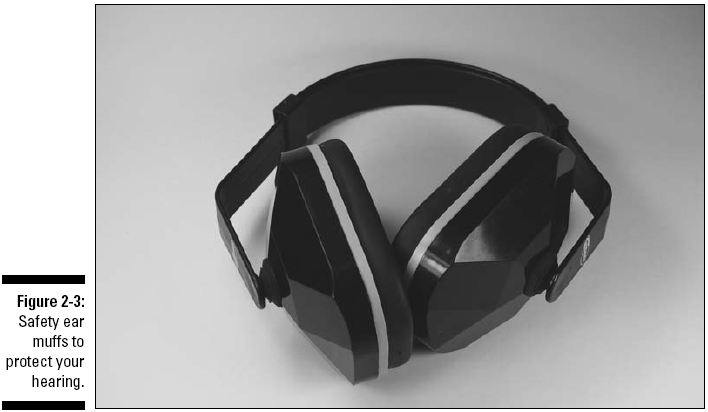
You should put on certain safety devices — such as ear protection, safety glasses, and leather work gloves — depending on the kind of work you’re doing. Ear protection makes sense if you’re working with loud noises, such as when
running a very loud power tool. With small electronics projects, like the ones in this book, you probably won’t use a very loud piece of equipment. But if you graduate to working on life-size robots, consider your hearing when working with power tools. You can purchase ear muffs, like the ones shown in
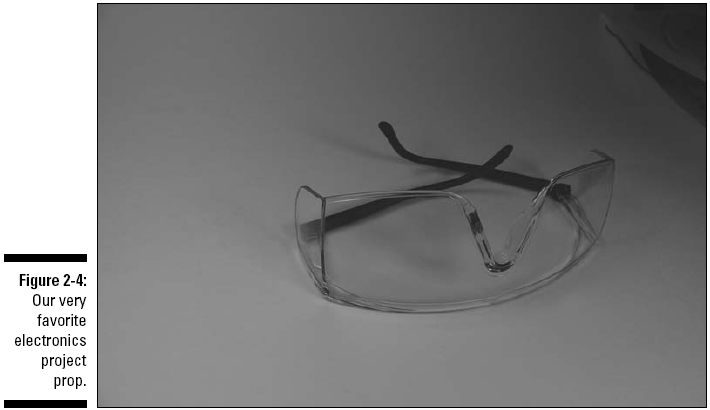
As Mom used to say, when they were handing out eyes, you get only two, so take care of them. Safety glasses, like those shown in Figure 2-4, are practically a religion with us. In fact, we’d almost go so far as to say when you enter your
workspace, put on safety glasses. That could be going too far, but there are many, many instances when you should wear them: when cutting anything, soldering, clipping wires, and so on. Consider whether safety glasses wouldn’t be a good idea before you do any procedure.
Don’t delude yourself that regular prescription glasses will protect you. They arent necessarily made of shatterproof material. Too, they have no protection along the sides.
Direct things that you’re cutting down — toward your workbench — instead of up toward your face. As long as you can make the cut without looking, this can guarantee that flying pieces go away from you and not toward you. If you’re working a lot with something that generates fumes (anything from paint to solder), consider taking a cue from Zorro and wearing a mask called a
respirator (but wear yours over your mouth and nose) that can be found at any hardware store. Respirators are rated for different types of protection, so make sure you get the appropriate one. For example, one type might keep small particles like sawdust out of your mouth, and another might be designed to keep fumes at bay.Clean up your stuff!
Keeping your workspace neat, including minimizing strung-out cords that could trip you up, is important in preventing accidents. A cluttered work surface makes it hard to see what you’re reaching for. You might reach over to grab a plastic box, only to come up with a mini hacksaw in your palm (ouch!). Pick up small pieces of cut wire or loose screws and nails. Not only could you step on one and cut yourself if you decide to work barefoot someday (not something we recommend), but a pet or child could pick up such small items and decide they would be tasty.
Keeping kids and pets out of your space
Besides keeping your space neat, you should also keep your space off-limits to the smaller members of your household: namely, kids and pets. Even if you put away all sharp tools religiously and make sure that any power source is disconnected from breadboards, small hands (or paws) are made for mischief.
If you can, lock your workspace when you’re not in it. If you can’t (maybe because your workspace is a corner of your den), lock up your electronic project tools, components, and works in progress in a box or cabinet.
Electronics and alcohol don’t mix
Okay, this probably goes without saying, but don’t work around electronics if you’ve had a drink (or two or three). Alcohol slows your brain and has an impact on your judgment. Bad judgment around electricity or sharp power tools could be fatal. ’Nuff said?